What Is Answer Engine Optimization (AEO) and Why Toronto Businesses Can’t Ignore It in 2026

February 20, 2026 | Toronto, ON — As AI-powered search reshapes how Canadians find businesses, products, and services, Answer Engine Optimization has moved from emerging tactic to non-negotiable strategy for any Toronto business that wants to remain visible online.
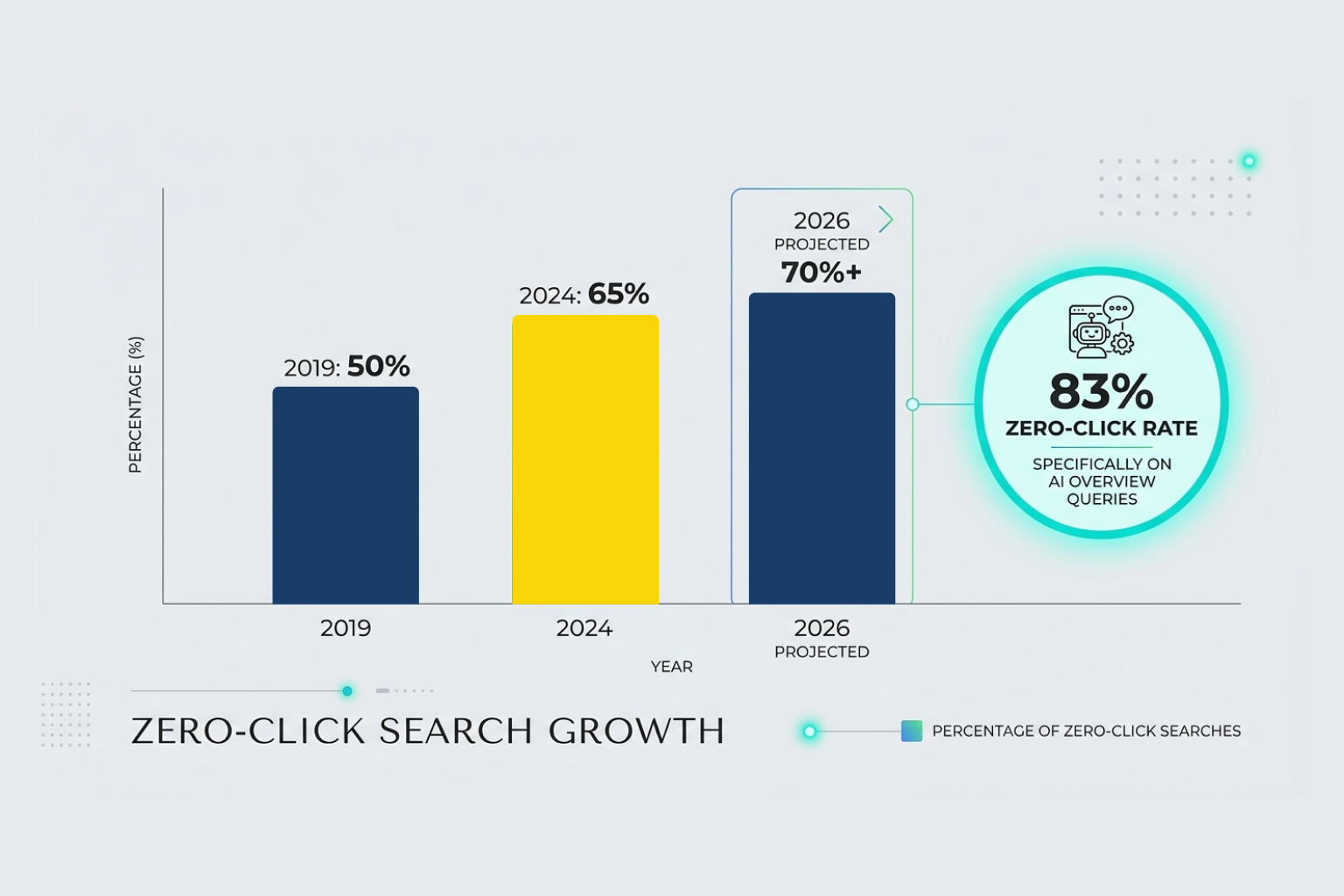
Over 65% of all Google searches now end without a single click to an external website. Users are getting their answers directly inside the search results page, from AI Overviews, featured snippets, knowledge panels, and voice assistants, before they ever visit your site. For Toronto businesses built on a steady flow of organic traffic, this is the most significant structural shift in the history of digital marketing.
This is what Answer Engine Optimization (AEO) was designed to address. If you want a comprehensive look at how AEO fits inside a full organic growth strategy, our SEO and GEO guide for Toronto businesses covers the complete picture. This article goes deeper on AEO specifically: what it is, how it works, and what Toronto businesses need to do right now to remain visible in an environment where AI answers the question before your link is ever clicked.
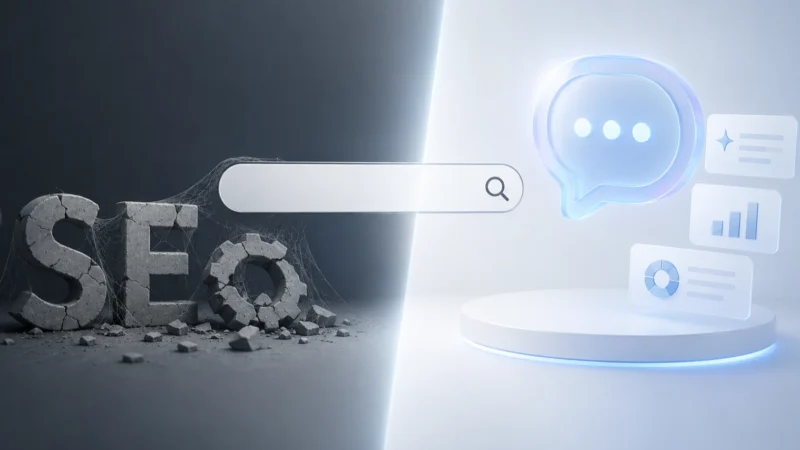
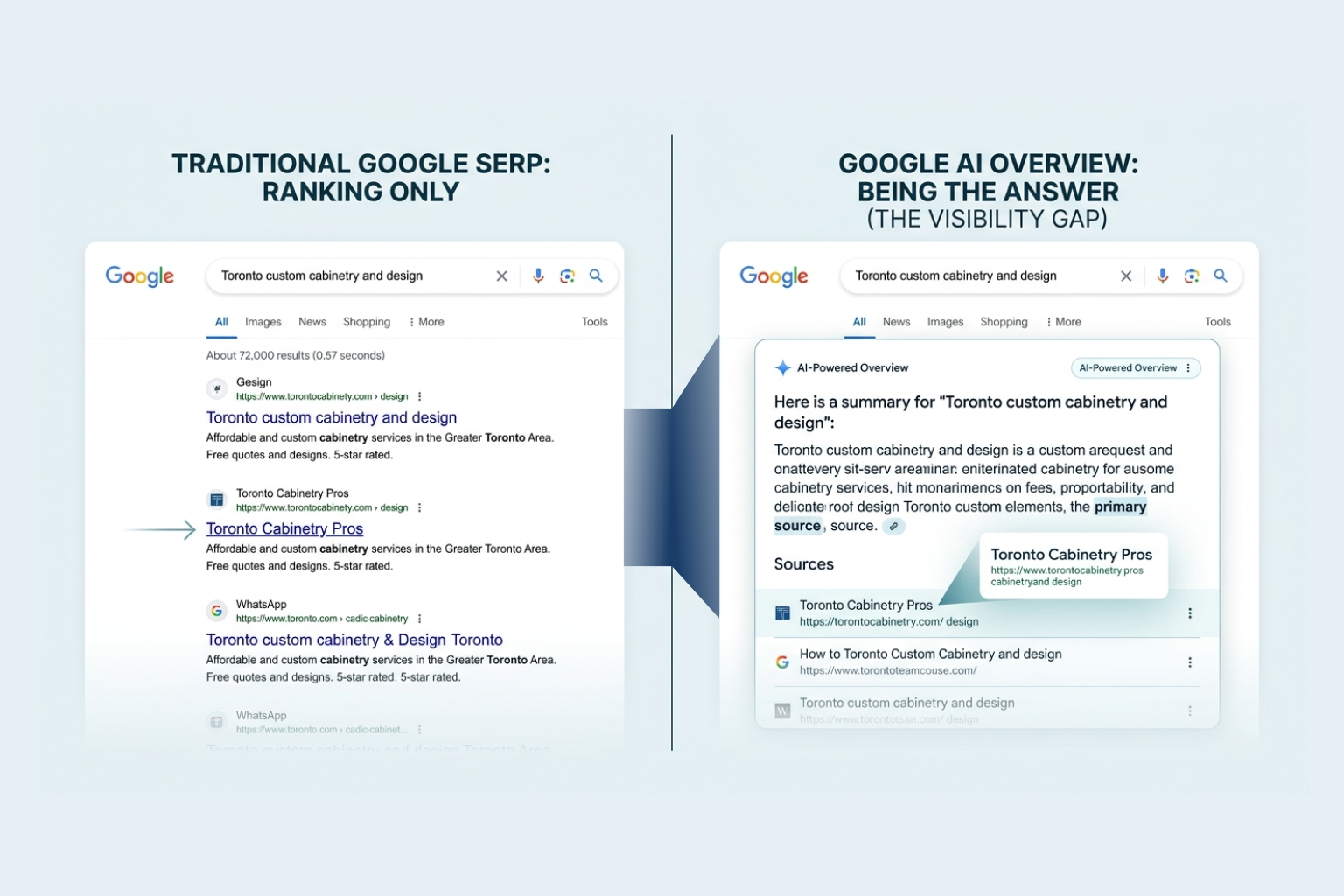
Answer Engine Optimization (AEO) is the practice of structuring your content so that AI-powered platforms, including Google AI Overviews, ChatGPT, Perplexity, and voice assistants, select your brand as the cited source when generating direct answers to user queries. Where traditional SEO targets a ranking position on a results page, AEO targets the answer itself, the zero-click response that appears above every other result.
Here is what this article covers:
- What AEO actually is: A plain-English definition of how answer engines work and why they differ from traditional search
- Why 2026 is the inflection point: The data behind the zero-click surge and what it means for Toronto businesses specifically
- How to win Position Zero: The specific content structures, schema formats, and technical requirements that earn AI citations
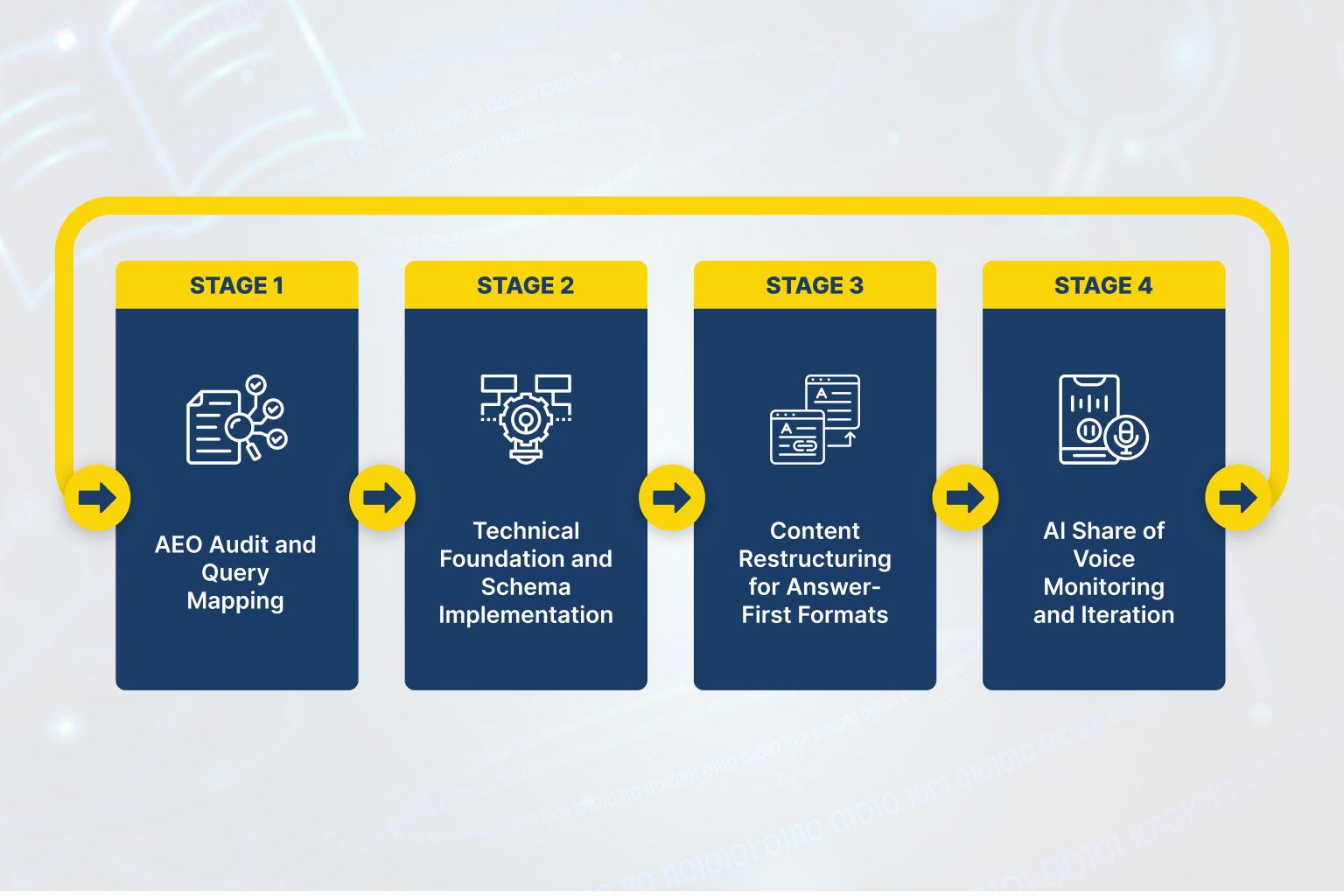
- What a complete AEO strategy looks like: The full methodology from audit to optimization to ongoing monitoring
Quick Facts: Answer Engine Optimization in Toronto
| What You Need to Know | How It Affects Your Business |
|---|---|
| 65% of all Google searches end without a click to any external website | More than half your potential customers are getting their answer inside Google before they ever reach your site. If your brand is not the cited source, you are invisible to that majority. |
| 83% zero-click rate on queries where AI Overviews appear | When an AI Overview is triggered, 8 out of 10 users never scroll past it. Position Zero is not just the best position. It is the only position that consistently earns attention on those queries. |
| Content formatted for AI extraction is 3 times more likely to be cited | Structured, answer-first content that uses headers, FAQs, and schema markup earns citations at triple the rate of unstructured long-form pages, regardless of which ranks higher organically. |
| 82% of AI citations come from earned media sources such as editorial coverage and third-party blogs | AEO is not purely a technical discipline. The brands being cited most frequently are those with real digital authority, earned through press coverage, industry publications, and credible backlinks. |
| 0.65 correlation between domain authority and AI citation frequency | Your existing SEO investment directly determines how often AI systems choose to cite you. Weak domain authority is the single biggest obstacle to AEO performance. |
| Gartner projects 25% of organic search traffic will shift to AI assistants by end of 2026 | A quarter of the traffic that currently arrives through traditional organic search is in transition. Businesses that optimize for answer engines now will capture that traffic. Those that do not will watch it flow to competitors. |
How AEO Works: The Strategic Methodology
Understanding the Local Search Landscape
The shift from traditional search to answer-first search did not happen overnight in Toronto, but it has accelerated sharply. Google AI Overviews went from appearing in 6.49% of queries in January 2025 to over 30% by late 2025, according to Semrush’s analysis of 10 million keywords. In business and technology categories, that figure exceeds 33%. For a Toronto professional services firm, a home services company, or a healthcare provider, this means a substantial and growing portion of the queries that should be sending traffic to your site are now being resolved inside the search results page itself.
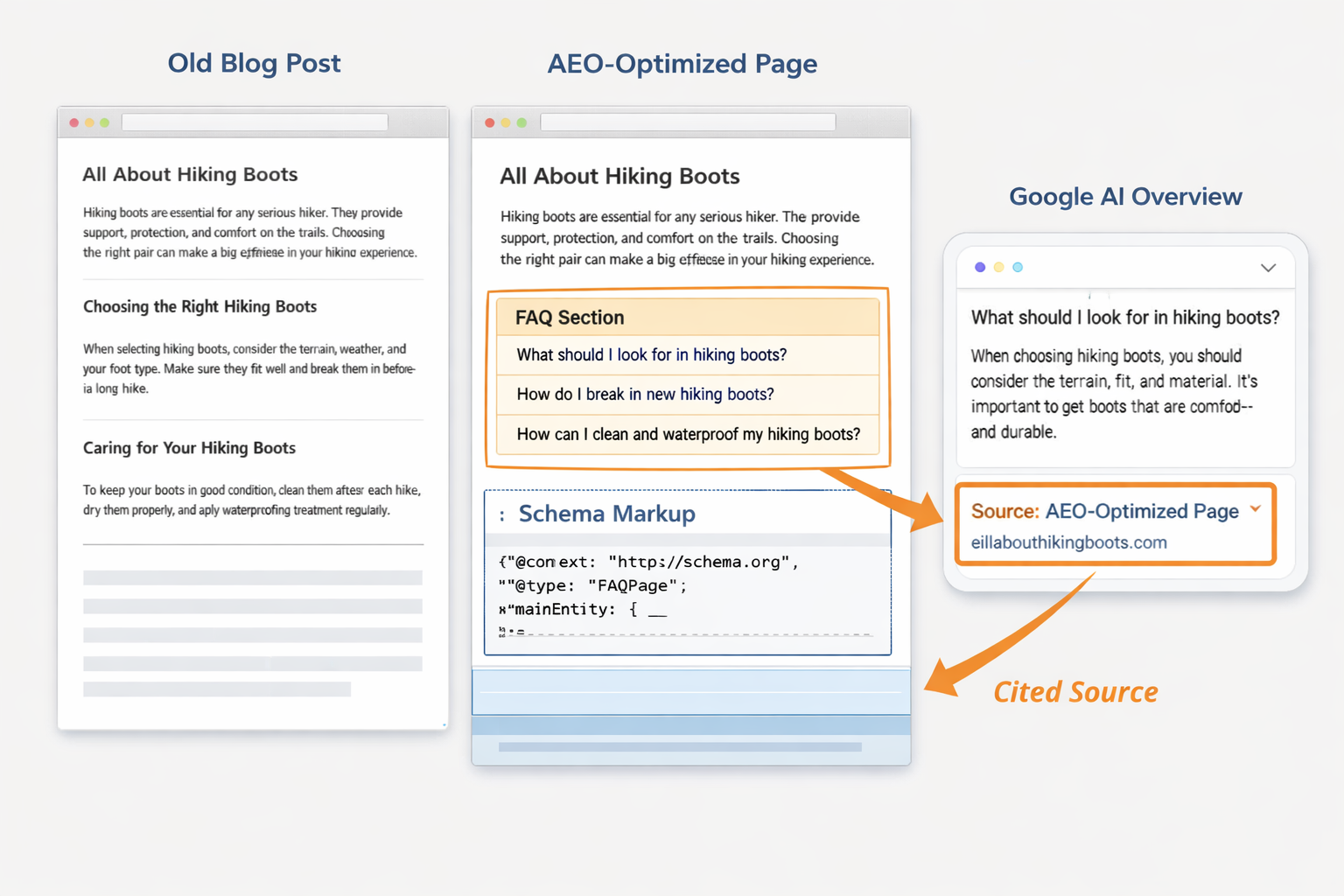
The businesses that are winning in this environment did not get lucky. They restructured their content to match how AI systems extract and synthesize information. AI models do not rank pages the way Google’s traditional algorithm does. They identify entities, understand relationships between concepts, and surface the clearest, most authoritative, most directly structured answer to a specific question. A Toronto law firm that restructures its FAQ content with proper schema markup, clear entity definitions, and direct 40-60 word answer blocks is the firm that gets cited. The one with a dense, keyword-heavy paragraph buried three screens down is not.
Voice search adds another dimension to this. Voice search now accounts for approximately 30% of all web browsing sessions globally, and voice assistants pull 40.7% of their answers directly from featured snippets and AEO-optimized structured content. In Toronto, where smartphone penetration is among the highest in Canada, voice-initiated local searches are a significant source of high-intent queries. “What is the best accountant near me,” asked to Siri on a commute, is resolved entirely by AEO-optimized content. Your traditional SEO ranking plays no role in that answer.
Building the High-Performance Foundation Your Content Needs
AEO does not replace your SEO foundation. It builds directly on top of it. There is a 0.65 linear correlation between domain authority and AI citation frequency, which means that weak technical SEO, thin content, and poor backlink profiles all directly suppress AEO performance. Before a single piece of AEO-specific optimization can work at its full potential, the technical infrastructure needs to be clean.
The foundational requirements for high AEO performance include:
A fast, fully crawlable site that AI bots, including PerplexityBot and Googlebot, can access and index without restriction. Schema markup implemented at the page level, with FAQPage, Article, Organization, and LocalBusiness schemas deployed on the pages most likely to be cited for your target queries. Entity clarity throughout your site: consistent naming conventions, clear descriptions of what your business does, who it serves, and where it operates, structured so that AI systems can build an accurate knowledge graph around your brand.
Content structured using the inverted pyramid model, where the most critical answer appears in the first 40-60 words of each section, followed by supporting context, data, and proof. Research from SEMAI.AI confirms that direct, concise summaries placed immediately after an H2 heading have the highest probability of being pulled into an AI Overview. Wall-of-text paragraphs do not get cited. Scannable, structured, answer-first content does.
Our Answer Engine Optimization service is built around this exact technical and content architecture, delivering the full AEO infrastructure that Toronto businesses need to earn consistent AI citations.
Earning Citations Through Targeted Content Strategy
The mechanics of AEO are distinct from traditional keyword targeting. AI systems do not simply surface the page that ranks highest for a keyword. They surface the page that most clearly and authoritatively answers the specific question being asked, in a format they can easily extract and synthesize. This means the content strategy required for AEO success is built around questions, not keywords.
Effective AEO content targets three query categories:
“Know” queries are the core of AEO. These are informational questions where the user wants a direct, factual answer: “What is a HELOC?” or “How long does a trademark application take in Canada?” Content optimized for these queries uses clear headers, direct 40-60 word definitions, and FAQ schema to make the answer immediately extractable.
“Know simple” queries are the featured snippet sweet spot: single-fact answers to direct questions. “What is the current corporate tax rate in Ontario?” These require precise, up-to-date, clearly structured responses with proper schema markup.
Conversational long-tail queries are the fastest-growing AEO opportunity. “What should I look for when hiring a digital marketing agency in Toronto” is the kind of question being asked of ChatGPT and Perplexity every day. Content that directly addresses these multi-word, intent-rich queries in a structured format earns citations on the platforms where purchase intent is highest.
Collaborative Optimization Using Real Performance Data
AEO is not a one-time implementation. AI citation behaviour changes as platforms update their models and citation preferences evolve. A page that earns consistent Perplexity citations today may need structural updates within three to six months as the platform refines its extraction logic. Monitoring your AI Share of Voice across ChatGPT, Perplexity, Google AI Overviews, and Gemini is as important as monitoring your Google keyword rankings.
The feedback loop that powers ongoing AEO improvement works like this: you track which queries are triggering AI Overviews or AI platform citations in your category, identify which of your pages are being cited and which are being bypassed, analyze the structural and content differences between cited and bypassed pages, and iterate based on that data. This cycle, combined with the earned media and Digital PR work that drives the third-party citations AI systems favour, is what separates businesses that consistently appear in AI answers from those that occasionally appear by chance.
The Five Pillars That Determine AEO Success
The Role of an Authoritative Brand Presence
AI systems do not guess at authority. They calculate it from signals that are largely the same signals Google uses for traditional SEO, with one critical addition: third-party citations from credible sources. According to Muck Rack’s Generative Pulse 2025 report, which analyzed over one million citations across ChatGPT, Gemini, Claude, and other platforms, 82% of links cited by AI come from earned media sources, including journalistic coverage and third-party blogs. Press release citations increased fivefold between July and December 2025, with structured releases now accounting for up to 6% of all citations.
For Toronto businesses, this means that Digital PR is not a soft brand-building exercise. It is a direct AEO tactic. Every time a credible Toronto publication, industry blog, or national outlet cites your business by name, writes about your expertise, or links to your content, you are building the third-party citation network that AI systems use to determine which brands deserve to appear in their answers. A Toronto contractor quoted in a BNN Bloomberg piece on housing trends is more likely to appear in ChatGPT’s answer to “best home renovation contractors in Toronto” than a competitor with a technically superior website but zero earned media presence.
Market Visibility and Relevance: Being Present When It Counts
The window for establishing early AEO authority in most Toronto market categories is still open, but it is closing. AI systems develop citation habits: the brands that earn consistent citations first tend to maintain that advantage as the platform’s training data reinforces existing source preferences. This is the same dynamic that made it difficult to displace an entrenched page-one Google ranking, but it is playing out faster and across more platforms simultaneously.
The businesses that act on AEO now, while most Toronto competitors are still focused exclusively on traditional SEO, are establishing citation authority at a lower competitive cost. Twelve months from now, the cost of earning AI citations in high-competition Toronto categories will be significantly higher because more businesses will be competing for the same limited citation slots.
Analyzing Engagement and Behavior: What the Data Tells You
One of the most common AEO mistakes Toronto businesses make is treating it as a set-and-forget technical implementation. Schema markup goes up, FAQ pages get structured, and then nothing changes for twelve months. But AI citation behaviour is dynamic. Platforms update their models. Citation preferences shift. New query patterns emerge as more users adopt conversational search.
The businesses maintaining and growing their AI Share of Voice are the ones tracking citation performance on a monthly basis, the same way they track keyword rankings. They are monitoring which of their pages get cited for which queries, identifying gaps where competitors are being cited instead, and updating their content to address those gaps. They are also watching for new conversational query patterns in their category and creating structured content that addresses them before competitors do.
Reaching High-Intent Segments: The AEO Conversion Advantage
The traffic that arrives from AI citations is fundamentally different from standard organic search traffic. It converts at higher rates because the AI has already acted as a filter, presenting your business as the recommended answer to a specific question. A user who clicks through from a Perplexity citation that says “Consultus Digital is among the leading AEO agencies in Toronto” is not browsing. They are validating a recommendation. That is a fundamentally different buyer posture.
NerdWallet’s content restructuring for AEO is one of the most documented case studies in the discipline. After shifting its content strategy to focus on direct answers to common financial questions, the platform saw a 35% increase in revenue, despite a simultaneous drop in overall site traffic. The traffic that arrived through AEO-optimized content converted at significantly higher rates than the broader organic traffic it replaced. This is the AEO conversion premium: fewer clicks, higher intent, better outcomes.
Leadership Through Shared Expertise: The Content That Gets Cited
The content that AI systems cite most frequently is not the content that tries to be everything to everyone. It is the content that demonstrates genuine, specific expertise on a narrow topic, structured clearly enough for an AI to extract a precise answer. Pro tip: 99.2% of keywords triggering AI Overviews are informational, which means simple content that restates what other sources already say will not earn citations. AI systems are increasingly rewarding content that includes first-hand case studies, proprietary data, and specific expert insight that cannot be replicated from generic sources.
For Toronto businesses, this is both a challenge and an opportunity. The challenge is that generic, template-driven content will not compete in the AI citation economy. The opportunity is that businesses willing to share genuine expertise through well-structured content, the kind grounded in their actual experience, real client outcomes, and specific local knowledge, have a meaningful advantage over competitors producing AI-slop at scale.
What Influences the Resolution of Your AEO Strategy?
Several factors determine how quickly and how effectively an AEO program delivers AI citation visibility for a Toronto business.
Your existing domain authority is the single biggest variable. A site with strong existing SEO rankings, quality backlinks, and a clean technical foundation will see AEO improvements take hold faster than a site starting from a weaker baseline. AI systems weight domain authority heavily because it is the most reliable proxy for source credibility.
The competitiveness of your query targets determines how much work is required to displace existing citation holders. In less competitive Toronto categories, a single well-executed AEO content sprint can produce meaningful citation improvements within sixty to ninety days. In highly competitive categories, professional services and real estate especially, establishing consistent AI citations requires a sustained multi-month investment in both content optimization and earned media.
The current state of your schema markup and site structure determines how accessible your content is to AI extraction. A site with no schema implementation, poor internal linking, and unstructured content will require a more significant foundational investment before AEO optimization produces results.
Content recency and specificity matter more for AEO than for traditional SEO. AI systems favour sources that demonstrate current expertise, so content that has not been updated in twelve or more months is at a structural disadvantage against fresher, more specifically structured competitors.
If you are investing in content marketing alongside AEO, the two programs compound each other: fresh, authoritative content earns AI citations that drive higher-intent traffic, which builds the engagement signals that reinforce your domain authority and earn more citations over time. To start building this compounding visibility, book a free strategy session with our Toronto AEO team.
Qualities of a Tier One AEO Partner in Toronto
Not every digital agency in Toronto is equipped to execute a genuine AEO strategy. The discipline requires a specific combination of technical SEO expertise, content strategy capability, earned media relationships, and AI platform monitoring tools that most traditional SEO agencies have not yet built.
A tier-one AEO partner conducts a proper AI visibility audit before recommending any work. This means running your priority queries through ChatGPT, Perplexity, and Google AI Overviews to establish your current AI Share of Voice and identify exactly which competitors are being cited instead of you. Without this baseline, any AEO work is guesswork.
They also understand that AEO and SEO in Toronto are not separate disciplines. A partner that treats them as competing priorities does not understand how AI citation works. The 0.65 correlation between domain authority and citation frequency means that an agency ignoring your technical SEO foundation while claiming to optimize for AI answers is building on sand.
Finally, the right partner measures what actually matters for AEO: citation frequency, AI Share of Voice, and the conversion rate of AI-referred traffic, not just keyword rankings and organic traffic volume. In 2026, ranking well without appearing in AI answers means leaving a measurable portion of your potential revenue on the table.
Frequently Asked Questions
What Is the Difference Between AEO and SEO?
Traditional SEO optimizes your website to rank higher in Google’s blue-link results and earn clicks. AEO optimizes your content to be selected by AI systems as the cited source in a direct answer, whether that appears in a Google AI Overview, a ChatGPT response, a Perplexity answer, or a voice assistant result. The two disciplines share the same technical foundation: domain authority, crawlability, and content quality all matter for both. But AEO adds answer-first content structuring, schema markup for AI extraction, and earned media citation building as additional requirements. In 2026, businesses need both working simultaneously.
How Long Does It Take to See AEO Results?
Technical AEO improvements, such as schema implementation and content restructuring, can produce citation improvements within thirty to sixty days for queries where your site already has strong domain authority. Building AI citations in competitive categories through earned media and sustained content optimization typically takes three to six months for meaningful results, and six to twelve months for consistent, defensible AI Share of Voice. The businesses that start now will find it significantly easier and less expensive to hold those positions than the businesses that start twelve months from now.
Why Is My Competitor Appearing in AI Answers but My Business Is Not?
The most common reasons are domain authority gaps, content structure, and earned media presence. If a competitor has stronger backlinks, more structured AEO content with proper schema markup, and more third-party citations from credible publications, AI systems will consistently choose them as the cited source. A proper AEO audit, which benchmarks your AI Share of Voice against specific competitors across your target queries, will identify exactly which of these gaps is driving the difference.
Does AEO Work for Local Toronto Businesses?
Yes, and local businesses often have a structural advantage in local AEO because the competition for location-specific query citations is typically lower than for national queries. A Toronto plumber optimizing for “emergency plumber Toronto” in an AEO context is competing against fewer citation contenders than a national software company targeting a generic industry query. Local schema markup, Google Business Profile optimization, and location-specific FAQ content are the core tactics for local AEO visibility.