Nearly every guide to ecommerce marketing a Canadian merchant reads was written by a US platform, for a US store, with US shipping and US margins behind the advice. Canadian click costs, CASL consent rules and the CAD $150 customs line that decides whether a competitor’s shipment gets taxed at the door appear in none of them. This guide covers the channels, what they cost in Canadian dollars, and the order to fund them in.
What ecommerce marketing covers
Ecommerce marketing is everything that moves someone from not knowing your store exists to placing an order, then back again for a second one. For most Canadian stores that’s six channels, and they do different jobs at different points.
| Channel | What it does | Time to revenue |
|---|
| Product and category SEO | Captures people searching for the specific product | 3 to 8 months |
| Paid search and Shopping | Buys the bottom of the funnel outright | Days |
| Paid social | Creates demand for products people weren’t searching for | 2 to 6 weeks |
| Email and SMS | Converts existing interest and drives repeat orders | Immediate, once the list exists |
| Reviews and UGC | Removes the last objection before checkout | Ongoing |
| Marketplaces | Rents someone else’s traffic at a fixed fee | Weeks |
Funding all six in month one is how a store ends up with six mediocre channels. Our eCommerce marketing division sequences them against margin and stock, because a channel that sells out your best SKU in a week hasn’t helped you.
What’s different about ecommerce marketing in Canada
Three things change the playbook, and none of them come up in a Shopify or BigCommerce guide.
The $150 line that works in your favour
Under CUSMA, goods shipped by courier from the US or Mexico into Canada clear free of duties and taxes up to CAD $40. Between $40 and $150 they’re free of duty but still attract federal and provincial taxes. Above $150, both duties and taxes apply. For goods shipped from anywhere else, the threshold is $20.
That means a Canadian shopper buying a $200 order from a US store can get a customs bill on delivery, and a Canadian shopper buying the same order from you does not. On any basket above $150 you have a landed-cost advantage over your American competitor, and it’s rarely stated on the product page. Putting “no duties, no customs delays, ships from Ontario” near the add-to-cart button is close to free conversion rate.
CASL decides what your list is worth
Canada’s anti-spam legislation governs commercial email and SMS. Consent is express or implied, and implied consent expires: an enquiry gives you six months, a completed purchase or written contract gives you two years. Every message needs sender identification and an unsubscribe mechanism that stays working for at least 60 days, per CRTC guidance.
The practical effect is that a Canadian list decays unless you keep converting implied consent into express consent. A pop-up that captures an address without a clear opt-in gives you six months and a compliance problem. One that asks plainly gives you a subscriber you can mail in 2029. Email marketing is usually the highest-margin channel a store owns, which makes the consent record worth more than the list size.
Margins in a smaller market
Canadian stores carry higher per-unit shipping over long distances, a smaller domestic audience, and often US-denominated cost of goods. The same 3x return on ad spend that works for a US brand at scale can lose money here once shipping and returns come out. Budget against contribution margin per order from the start.
The channels, and what each one is good for
Product and category SEO
Product pages win on specificity: the exact model, the size, the compatible part number. Category pages win the broader terms. Both need unique copy, correct product schema, and fast mobile pages, and both compound in a way paid traffic never does. The work behind SEO for ecommerce businesses is mostly structural: fixing thin variant pages, faceted URLs and duplicate descriptions pulled from a supplier feed.
Paid search and Shopping
Retail is one of the cheapest categories in Canadian paid search, generally $0.50 to $3 a click, against $8 to $30 in legal or insurance. That low cost per click is why Shopping and Performance Max carry so much ecommerce spend, and why the feed matters more than the campaign settings. Titles, GTINs, product types and images decide what you show up for. Paid media for ecommerce usually starts with a feed audit rather than a new campaign.
Paid social
Paid social sells products people weren’t looking for, which makes it the demand-creation channel for anything visual or new. Creative volume drives performance more than targeting does now. Plan for several concepts a month rather than one polished asset a quarter.
Email and SMS
Welcome flows, abandoned cart, browse abandonment and post-purchase sequences run on their own once built, and they’re where repeat revenue comes from. Build them before the next paid push, because paid traffic into a store with no flows pays once for a customer you then let go.
Reviews and user-generated content
Reviews answer the question a product description can’t: did this work for someone like me. Photo reviews do more than star ratings. Ask at delivery, then again after an interval that suits the product.
Marketplaces
Amazon reaches buyers who will never visit your site, at a fee you can calculate in advance. It also gives away the customer relationship. Running Amazon ads alongside your own store works when you treat the marketplace as paid distribution and keep your best margin on your own checkout.
What to budget by channel
These are planning ranges for a Canadian store doing roughly $50,000 to $500,000 a year online. Treat them as a starting shape to adjust against your margin.
| Channel | Monthly range (CAD) | Notes |
|---|
| Paid search and Shopping | $1,000 to $5,000 media | Scales with catalogue size and seasonality |
| Paid social | $1,000 to $4,000 media | Plus creative production |
| SEO and content | $1,500 to $4,000 | Technical fixes, category copy, product schema |
| Email and SMS | $300 to $1,200 | Platform plus flow build |
| Reviews and UGC | $200 to $800 | Tooling and incentives within platform rules |
| Agency management | 10% to 20% of media | Or a flat retainer by account complexity |
A rough allocation that holds up: put about 60% into the channel that already converts, 30% into the one you’re building, and keep 10% for testing. Revisit it quarterly.
Paid acquisition is the wrong first move for some stores. If your average order is under about $40 and customers rarely buy twice, the maths on paid social rarely closes at Canadian shipping costs, and the same money does more in SEO, email and packaging that earns a second order. Stores with thin margin and no repeat purchase are the ones where an agency should say no.
Planning Q4 and Black Friday
Q4 compresses a year of decisions into six weeks, and the work that makes it go well happens in September and October.
- September, fix the foundations. Audit the product feed, page speed and checkout. Build or refresh the email flows. Confirm stock on your top SKUs, because the fastest way to waste November media is to advertise something you run out of on the 26th.
- October, build the audiences and the creative. Run a low-budget prospecting campaign so your retargeting pools aren’t empty in November. Produce the offer creative early. Set the promotion calendar and the margin floor for each discount.
- November, spend into what’s working. Costs per click rise across the auction through BFCM. Hold budget back for the last week of November rather than front-loading it, and watch contribution margin daily rather than ROAS.
- December and January, keep the customer. Post-purchase flows, review requests and a January win-back sequence turn a discount buyer into a second order at full price.
What to measure
A 4x return on ad spend on a product with a 25% gross margin loses money once shipping and returns are counted. That’s why contribution margin per order, taken after cost of goods, shipping, payment fees and media, is the figure that tells you whether to scale. Return on ad spend compares campaigns against each other and says nothing about profit.
Three supporting numbers are worth a monthly look: conversion rate by device, repeat purchase rate at 90 days, and blended customer acquisition cost across all channels rather than per platform. If conversion rate is the weak one, spend the next dollar on conversion rate optimization before you spend it on traffic.
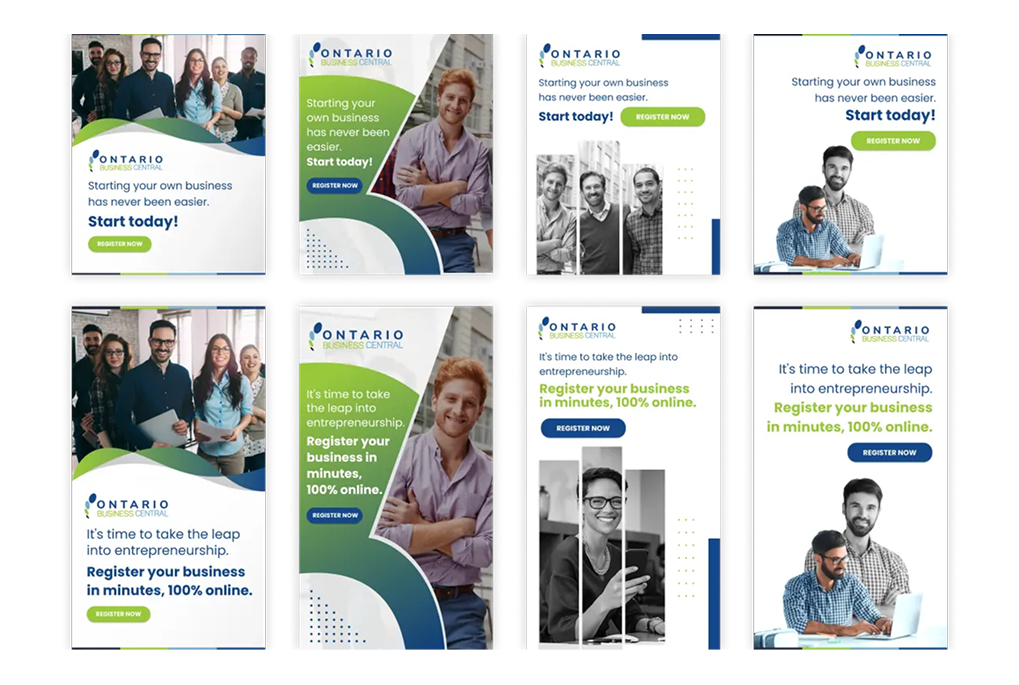
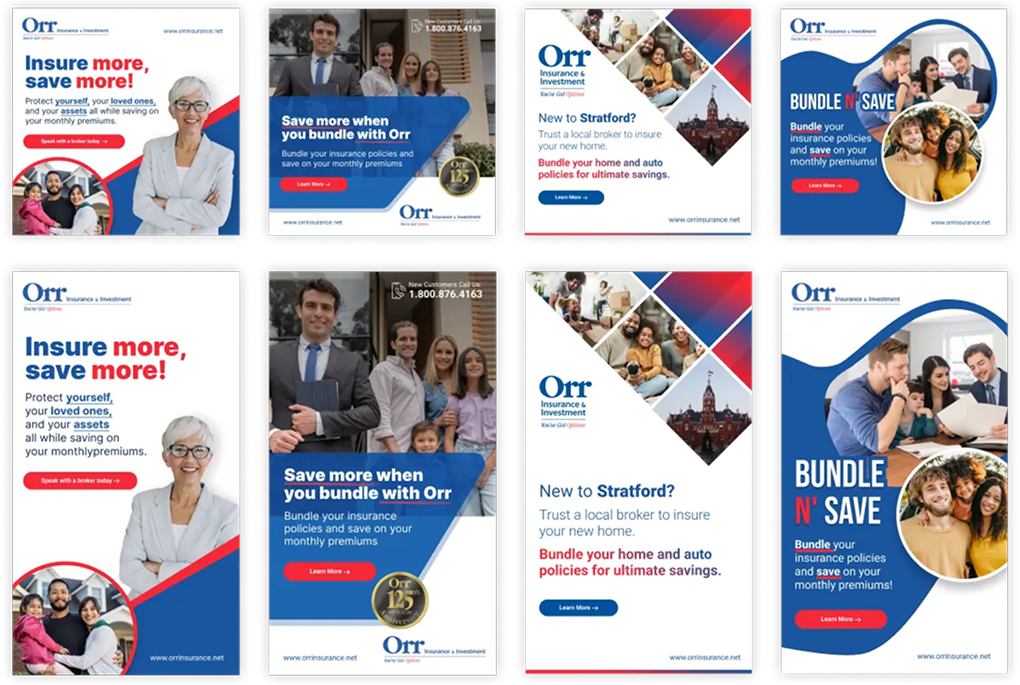
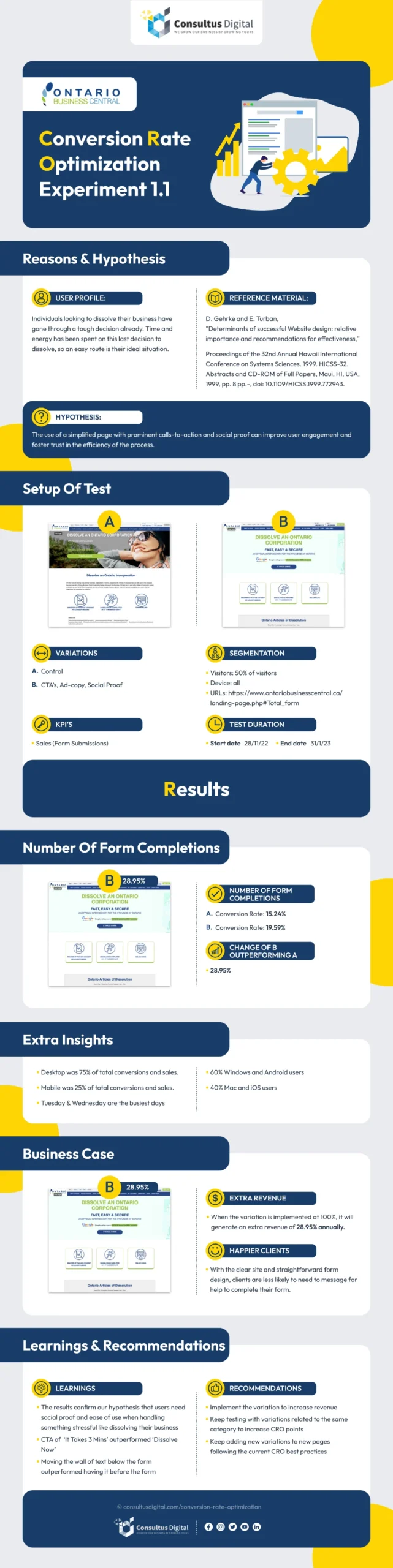
When we rebuilt the Google Ads and Meta Ads programs for Ontario Business Central, revenue rose 41% and return on ad spend improved 16% year over year, with transactions up 62% and users up 58% quarter over quarter. Most of that came from targeting and creative discipline on existing budget.
Frequently Asked Questions
What is ecommerce marketing?
Ecommerce marketing is the set of channels an online store uses to attract visitors, convert them into orders and bring them back, including SEO, paid search and Shopping, paid social, email and SMS, reviews, and marketplaces. It differs from general marketing because every channel is measured against a transaction. For Canadian stores it also has to account for CASL consent rules and cross-border shipping costs.
Why is ecommerce marketing important?
Because an online store has no foot traffic. Every visitor arrives through a channel you either built or paid for, so the marketing program is the storefront. For a Canadian merchant it also decides whether shoppers find you before they find a US competitor whose prices look lower until duties are added at the door.
How does SEO affect ecommerce marketing?
SEO captures people already searching for the product, which is the cheapest demand available and the only channel that keeps working when you stop spending. It takes three to eight months to show meaningful revenue, so it works best funded alongside paid search rather than instead of it. Product schema, unique category copy and fast mobile pages carry most of the result.
What are effective strategies for holiday or seasonal marketing?
Build audiences and email flows in September and October so November spend has something to retarget. Set a margin floor for every discount before the promotion calendar is published. Hold budget for the final week of November when costs peak, and treat January win-back as part of the same campaign rather than an afterthought.
What KPIs should ecommerce marketers track?
Contribution margin per order, blended customer acquisition cost, conversion rate by device and repeat purchase rate at 90 days. Return on ad spend is useful for comparing campaigns against each other and misleading as a profitability measure, because it ignores cost of goods, shipping and returns.
How do you increase ecommerce sales through digital marketing?
Fix conversion before buying more traffic, since a 1% lift on existing visitors is cheaper than a 20% budget increase. Then build the email and SMS flows that capture repeat orders, get the product feed right so Shopping shows the correct items, and add reviews to the pages where people hesitate. Extra media spend works once those three are in place.
Most Canadian stores have more room in margin and conversion than they do in budget, and the channel mix should follow that. Ready to turn your marketing into a growth engine? Claim your free 30-minute strategy session with Consultus Digital or call 416-460-1810.






 416-460-1810