Meta Ads: What Real Creative Diversity Looks Like in 2026

For the past couple of years, the standard fix for a sagging Meta campaign was to load forty small variations into an ad set. Swap a headline, try a different button colour, and hope the delivery system sorted it out.
Meta’s creative diversity score and its rebuilt ad retrieval engine have made that approach expensive. Near-identical assets now compete with each other for the same auctions. AI tools make volume cheap, but creative diversity is a different discipline. Here is what it means on Meta right now.
What Creative Diversity Means
The term gets used for three separate things, depending on who is talking:
- Algorithmic diversity (what the system sees): To Meta’s auction, diversity is math. It wants distinct visual signatures, varied aspect ratios, different formats and separate asset structures, so it does not treat your ads as duplicates cannibalizing each other.
- Conceptual diversity (what the marketer sees): Different angles. You change the value proposition, the pain point, the hook and the tone, so you are not selling the same product the same way to everyone.
- Representational diversity (what the viewer sees): Who is on screen and who feels spoken to: different ages, backgrounds, body types, genders and lived experiences.
Ignore any one of these and the campaign eventually flatlines. Ten visually distinct concepts that only feature 22-year-old fitness models cap your customer base. A diverse cast all reading the same stiff script over the same opening shot still gets tuned out by the algorithm.
A working definition: creative diversity means running ads that differ in concept, format, people and perspective, so you reach more of the market, slow down creative fatigue, and reflect the customers you are selling to.
Why Creative Diversity Matters on Meta Now
Meta’s ad delivery now leans on the creative to find the right people, so the variety in your ads shapes who sees them. Advertisers on Facebook and Instagram used to win with lookalike audiences and stacked interests. Broad targeting is now the default, and when the manual targeting dials go away, the creative does that work instead.
The reason is Meta Andromeda.
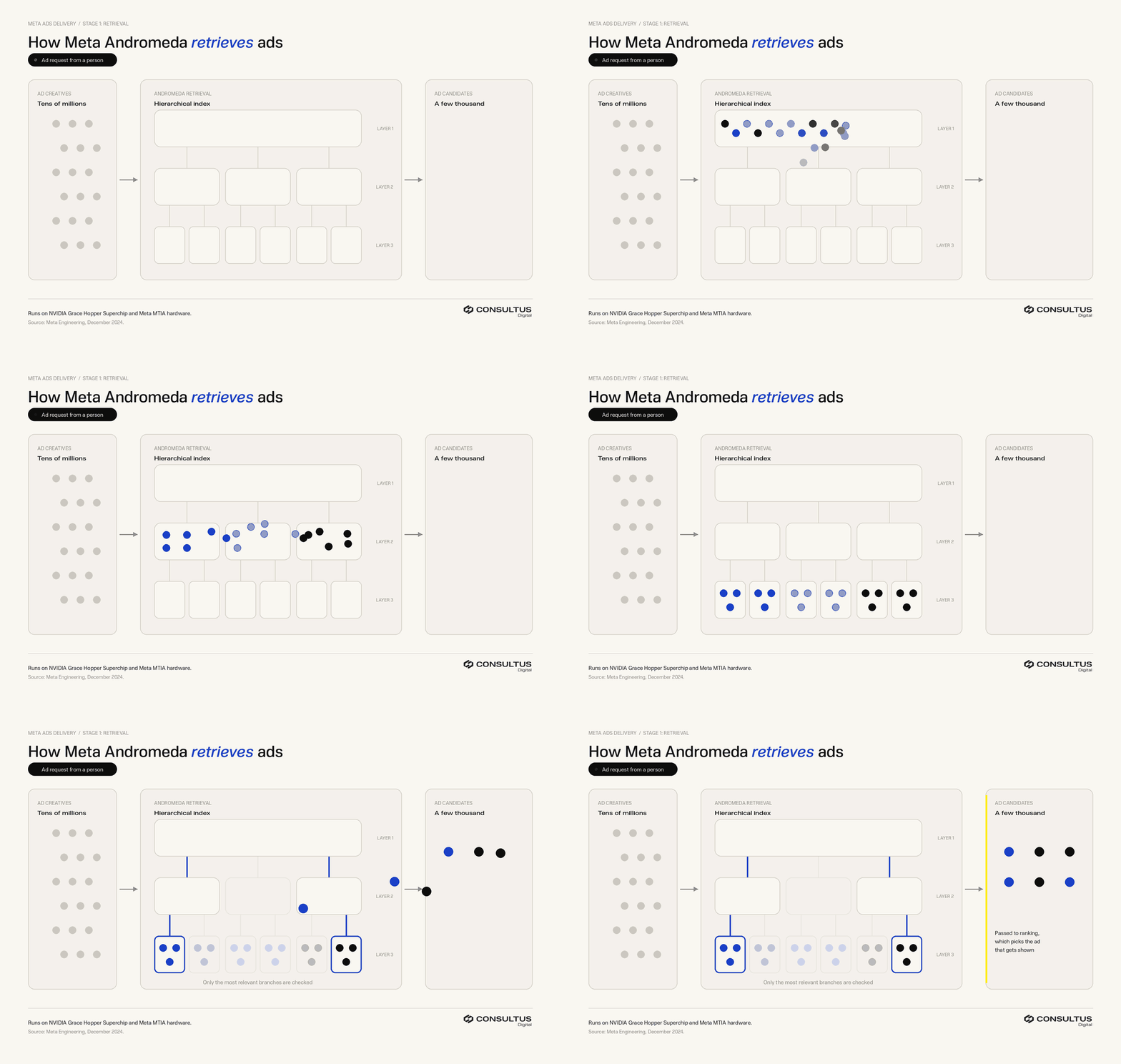
When someone scrolls into an ad slot, tens of millions of active ads technically qualify. Andromeda is the retrieval engine Meta built to cut that down to a pool of a few thousand. Only then do the heavier machine learning models predict who is likely to click or buy.
Give Meta one product demo and it can test one angle. Give it ads built around different pain points and different kinds of customers, and it can learn who responds to each. For your ads to enter different auctions across different feeds, they have to look different to the engine from the start.
Meta’s Creative Diversity Score: What It Measures
In late August 2026, Meta made this preference visible with the creative diversity score.
Where to find it
In Ads Manager, go to Columns > Customize columns > Creative diversity.
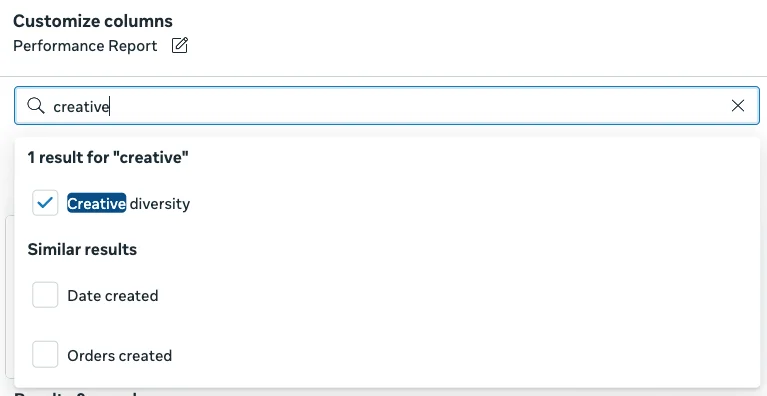
The score rates each ad set Low, Medium or High. It compares the visual similarity of the static images and video opening thumbnails across your active ads. In plain terms, it checks whether your ads look like copies of each other.
What the score does not tell you
- It is an estimate, and Meta says so. Meta’s help documentation notes that the score is estimated and still in development.
- It measures surface visuals, not ideas. Five talking-head clips with five different hooks can score Low because the opening frames look alike. Five different-looking assets pushing the same tired offer can score High.
- It is not worth trading CPA for. If a Medium ad set is bringing in your most profitable customers, do not break it to chase High. Use the score as a diagnostic when an ad set hits a wall.
Creative Diversity vs. Volume vs. Iteration
More ads will not raise your creative diversity unless they differ in ways a viewer would notice. Confusing volume with diversity is the most common mistake here. Meta draws a clear line between the three:
| Term | What it means | Example |
|---|---|---|
| Volume | How many ads you run | 20 ads in one ad set |
| Iteration | Small edits to one idea | The same video with a different call to action |
| Diversity | Ads that differ in concept, format, persona or message | A customer testimonial next to a founder video next to a problem-and-solution static |
Iteration squeezes more out of the audience you already reach. Diversification brings in new buyers who scrolled past your last winner.
How Different Is Different Enough?
Run your assets through these six dimensions. The left column is real diversification. The right column is iteration dressed up as something new.
| Dimension | Different enough | Too small (just iteration) |
|---|---|---|
| 1. Concept | A raw unboxing versus a story about why the founder built the product | Changing the headline from “Best Night Cream” to “Top-Rated Night Cream” |
| 2. Format | A handheld 9:16 TikTok-style clip versus a clean, editorial 4:5 static | Changing the accent font or border on the same static |
| 3. Hook | A strange, disruptive opener versus a quiet macro product shot | Changing the first text overlay from “Stop scrolling” to “You need this” |
| 4. Creator / persona | A 54-year-old mom walking through her routine versus a 22-year-old student using it on the go | The same creator reading three slightly reworded scripts in the same room |
| 5. Offer | A “Buy One, Gift One” bundle versus 15% off a first order | “15% off at checkout” versus “Use promo code SAVE15” |
| 6. Emotional angle | A self-aware, funny skit about a common frustration versus a serious clinical breakdown | Swapping one upbeat stock pop track for another |
For more on the hook dimension, see three ways to spark curiosity in your UGC hooks.
People Are a Dimension Too
Brands get the human side wrong often, and it has a large effect on whether people buy. The useful split is presence versus portrayal.
Presence: who is in the ad
The people in your ads should reflect the real mix of ethnicities, ages, gender identities and body sizes. Research from Kantar, along with Meta’s own research, links diverse casting to better brand recall and higher purchase intent.
People buy when they can picture the product in their own lives. If everyone in your ads looks like they came from the same casting catalogue, anyone outside that look assumes the product is not for them.
Portrayal: how they are shown
Let creators use their own cadence, voice and setting. A 50-year-old woman uses your skincare line for different reasons than a 20-year-old does. Let each of them talk about those reasons instead of reading the same script.
How to Build a Creative Diversity System for Meta Ads
To stop spending time on minor iterations, change how the work gets briefed and produced.
- Brief by concept. Start each round with distinct angles, such as a pain point, a testimonial, a demo and an objection, then assign people and formats to each.
- Cast for range. Vary who is on camera by age, background and role, and give each person a part that reflects real experience. That gives the algorithm variety and the viewer relevance.
- Plan one shoot for many assets. One creator can record several hooks, captions, end CTAs, aspect ratios and lengths, plus product-first and creator-first edits.
- Turn winners into new concepts. Take a winning ad and ask how you could tell the same story ten different ways.
- Watch the score without chasing it. Bring it into your performance review alongside your Meta ads benchmarks. When an ad set starts fatiguing and costs creep up, check it. If it has slipped from High to Low, do not just change the headline on your top video. Produce a new concept that opens up a new pocket of users.
Get Help With Meta Ads Creative
Consultus Digital runs Meta ads and produces performance creative for brands in Canada and the US. If your ad sets keep fatiguing, contact us to review your creative mix.
Frequently Asked Questions
What does creative diversity mean in advertising?
Running a deliberate mix of different concepts, formats, hooks and people in your campaigns. Instead of tweaking colours or headlines on one base asset, you give the algorithm and the audience distinct reasons to pay attention.
What is Meta’s creative diversity score?
An ad set diagnostic in Ads Manager that rates visual variety as High, Medium or Low. It compares how similar your active images and video thumbnails look, which helps you spot an ad set leaning too heavily on identical-looking creative.
What is the difference between creative iteration and diversification?
Iteration makes small changes to a winning ad, like a new button colour or first line of text, to get more out of it. Diversification launches different concepts, visual styles and creators to reach new audiences and slow ad fatigue.
Why does broad targeting make creative diversity more important?
With broad targeting you are not filtering by interest or demographic. The algorithm finds the buyers, and the creative does the targeting. Varied creative gives Meta’s retrieval system, Andromeda, the cues it needs to show your brand to different segments of the market.